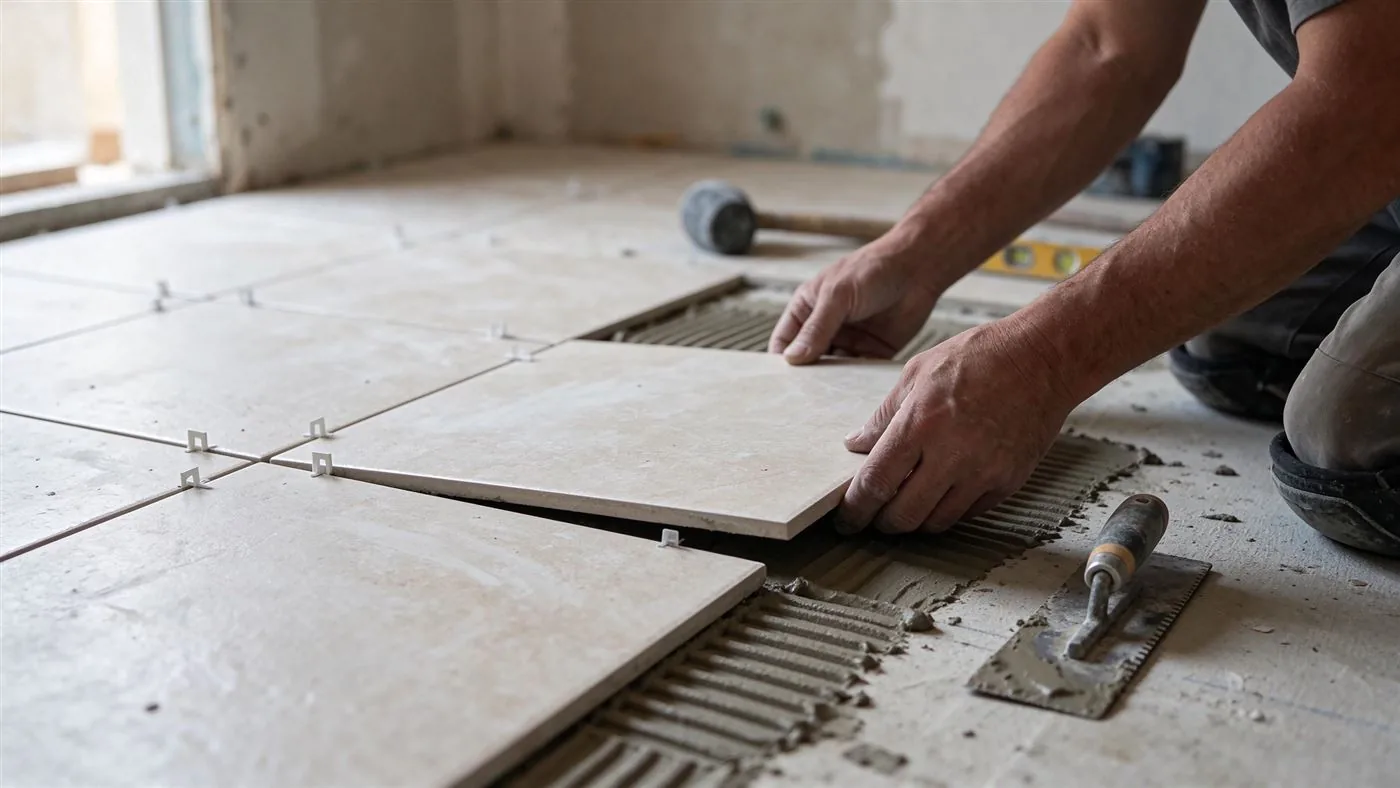
1. The area tells you the tiles. Nothing tells you the boxes.
Take a 10 foot 6 inch by 8 foot bathroom floor. Multiply the two and you get 84 square feet. With a 12 by 12 inch tile, one tile covers exactly one square foot, so the arithmetic is almost insultingly friendly: you need 84 tiles.
Every calculator on the first page of Google stops roughly here, with a small nod to waste. Add ten percent, they say, and move on. And that is where the answer stops being useful, because nobody sells 84 tiles or 92 tiles. Tiles come in boxes, and the box is the unit you hand money over for.
2. Waste is a percentage. Boxes are integers. The integers win.
Walk the arithmetic properly:
- Net area: 84.0 sq ft
- With 10 percent waste: 92.4 sq ft, rounding up to 93 tiles
- Boxes needed: 93 divided by 15 tiles per box is 6.2, so 7 boxes
- Tiles in hand: 7 boxes x 15 = 105
You planned for ten percent overage and you are carrying twenty-five percent. The extra 12 tiles cost $27 at $2.27 a tile, and they are the single largest line item most tile estimates get wrong in the other direction — people buy too few because they divide area by box coverage and round down.
The rule that matters: 10 percent waste is a floor, not a target. On a 12 by 12 tile in a box of fifteen, the box count already hides 10 to 25 percent of overage. What you must never do is round the box count down.
Two things follow from that. First, a room that lands just under a box boundary is genuinely cheaper than a room a few inches larger — 88 square feet with 10 percent waste is 97 tiles, still 7 boxes. Second, the percentage you choose matters much less than where the box boundary happens to fall.
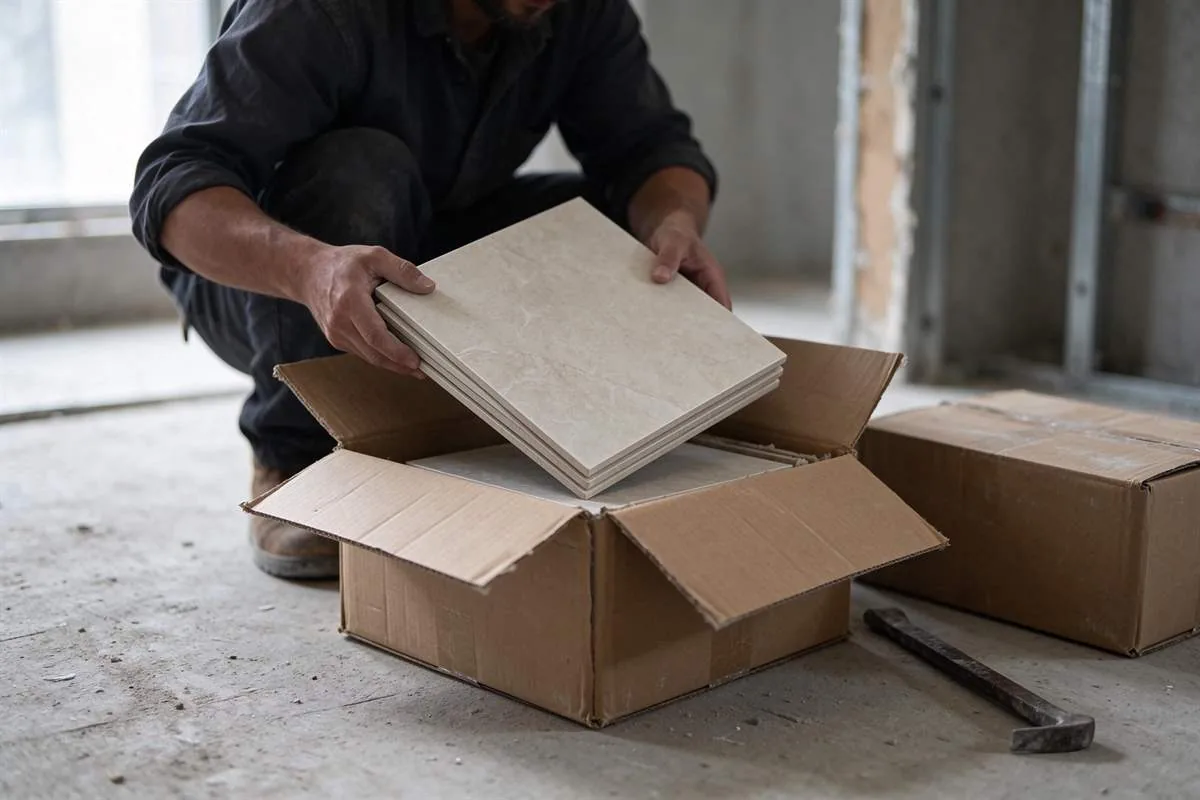
3. The same floor in three layouts, priced honestly
Here is the calculation almost no tile site publishes: the identical 84 square foot floor, laid three ways, with the realistic waste allowance for each.
| Layout | Waste | Tiles | Boxes | Tile cost |
|---|---|---|---|---|
| Straight lay (grid) | 10% | 93 | 7 | $238 |
| Diagonal, 45° | 15% | 97 | 7 | $238 |
| Herringbone | 20% | 101 | 7 | $238 |
All three cost the same. Ninety-three, ninety-seven and one hundred and one tiles all fit inside seven boxes of fifteen, so the five and ten point difference in waste never reaches your wallet. The layout that is supposed to be the expensive one is, on this floor, free.
That is not a rounding trick you can rely on everywhere. It is a specific consequence of one number: fifteen tiles per box. Change the box and the conclusion changes.
4. Where the layout starts costing money
The gap opens only when a layout pushes the tile count past a box boundary. Pushing the same 12 by 12 tile across a range of floor sizes makes the pattern obvious:
| Net area | Straight 10% | Diagonal 15% | Herringbone 20% | Extra boxes |
|---|---|---|---|---|
| 80 sq ft | 6 | 7 | 7 | +1 |
| 100 sq ft | 8 | 8 | 8 | 0 |
| 120 sq ft | 9 | 10 | 10 | +1 |
| 140 sq ft | 11 | 11 | 12 | +1 |
| 160 sq ft | 12 | 13 | 13 | +1 |
| 200 sq ft | 15 | 16 | 16 | +1 |
One box, at most, in every case. On a 200 square foot floor that is $34 against $510 of tile — under seven percent. So the honest answer to "does a herringbone layout cost more tile?" is: it costs one box, and it costs a great deal more in labour.
The labour is where the money is. Herringbone is roughly twice the setting time of a straight grid because each pair has to be squared off the last pair, and every perimeter tile needs a cut at both ends. If you are paying someone, that is the line that changes the quote, not the tile.
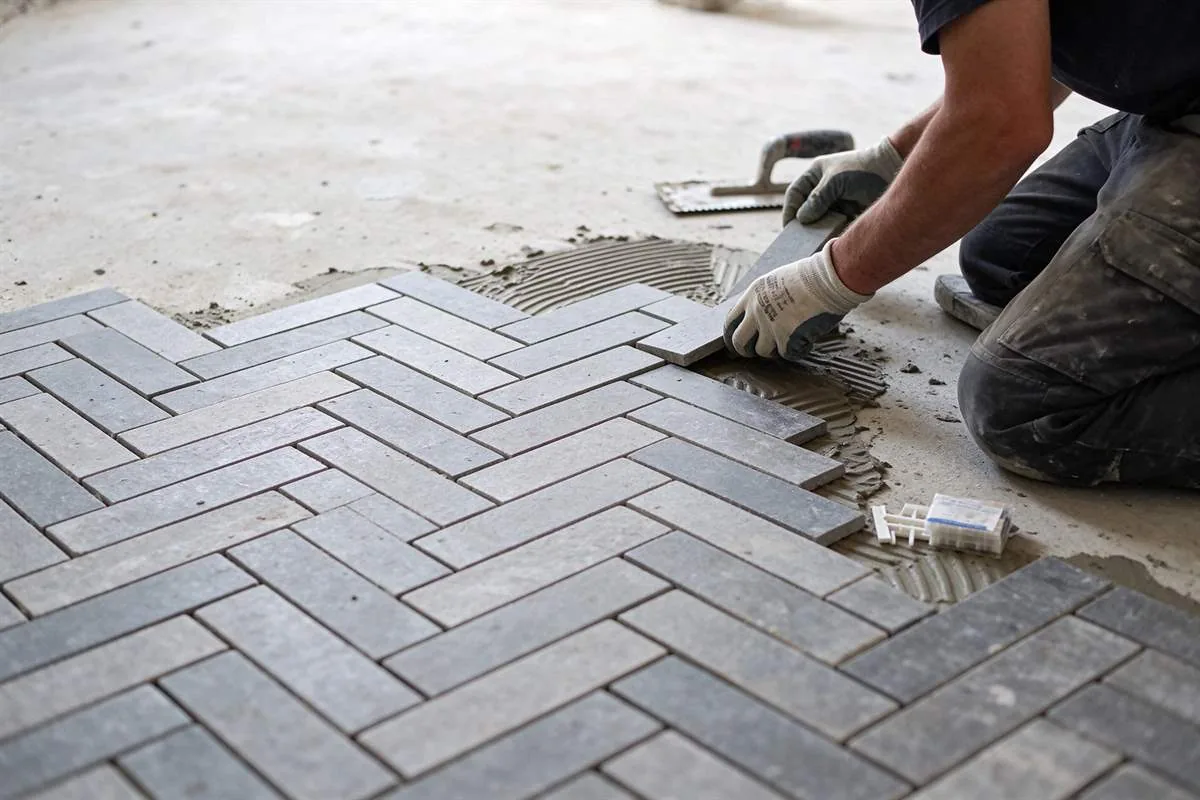
5. Cuts are a perimeter problem, not an area problem
Only the tiles that touch a wall get cut. Everything in the middle goes down whole. So the cut count comes from the room outline, and it is the number that decides how much of your weekend disappears:
- Straight lay: 2 x 11 rows along the length + 2 x 8 rows across the width = 38 tiles to trim
- Diagonal: every perimeter tile becomes a triangle, none of the offcuts can be reused — 52 tiles
- Herringbone: a cut at each end of most perimeter pieces — 65 tiles
Notice the shape of that growth. A 20 by 8 foot room is 160 square feet, nearly twice this floor, but its cut count is only 2 x 20 + 2 x 8 = 56 tiles — one and a half times. Doubling the area does not double the work. A long narrow room is cheaper per square foot than a square one, because it has less perimeter per tile.
This is also why "add 10 percent for cuts" is poor advice. If the room is large, 10 percent of the tiles is more than the cuts need. If the room is small and heavily cut, it can be less. The waste allowance is there to absorb broken tiles, not to pay for the cut geometry.
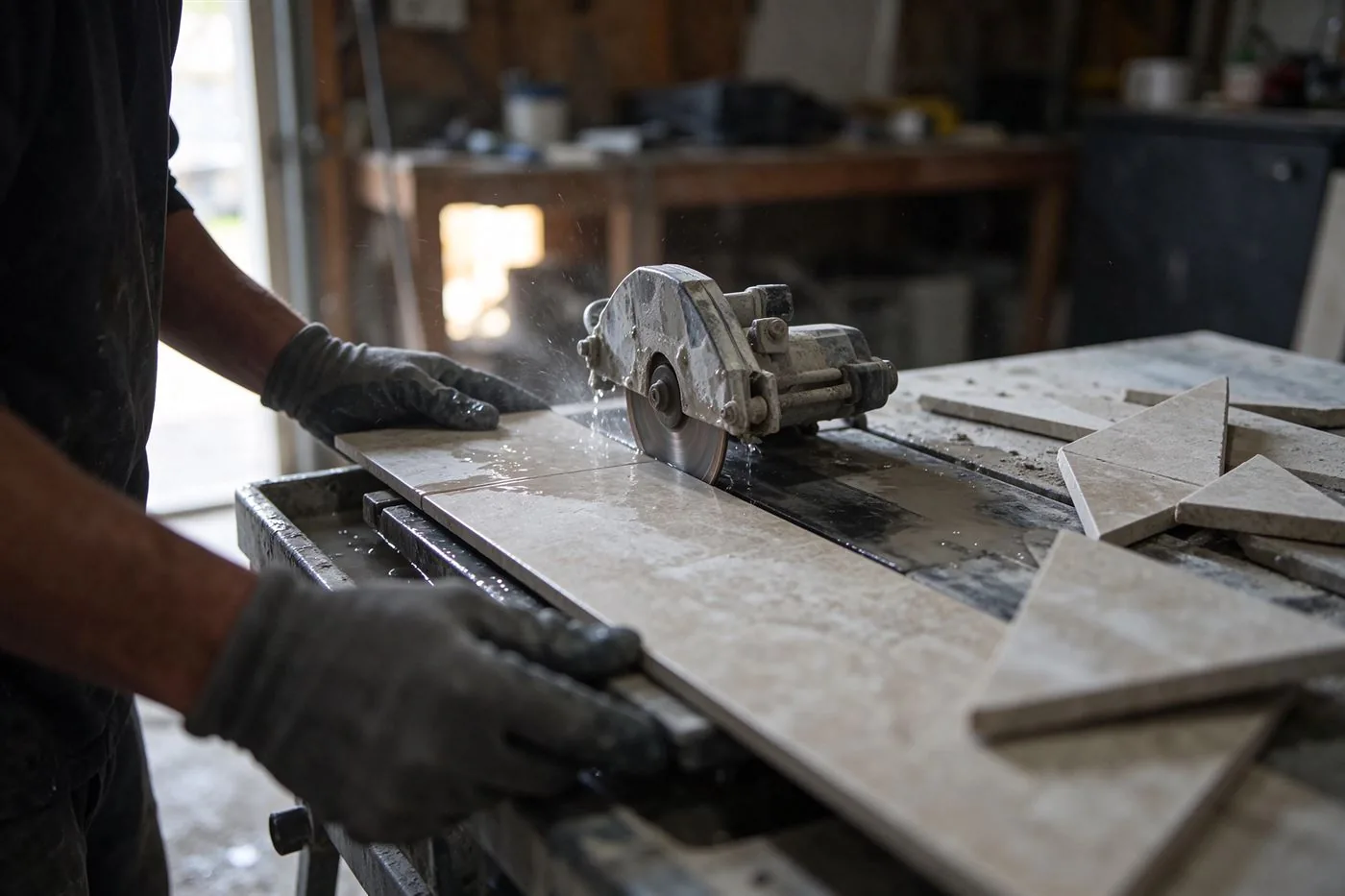
6. The number that should decide which tile you buy
Tiles per box is the strongest lever in the whole calculation, and it is printed on the carton in type small enough to miss. Two 12 by 12 porcelain tiles on the same shelf:
| Product | Box price | Tiles per box | Price per tile | Boxes for 84 sq ft | Tile cost |
|---|---|---|---|---|---|
| Tile A | $34 | 15 | $2.27 | 7 | $238 |
| Tile B | $30 | 11 | $2.73 | 9 | $270 |
| Difference | $4 cheaper | 20% dearer | +2 boxes | +$32 |
The cheaper box costs thirty-two dollars more. Thirty is a smaller number than thirty-four, which is exactly why the shelf tag works. Divide the box price by the tiles inside it before you compare anything.
And while you are reading that label, read the repeat: a tile with a visible pattern repeats every three or four tiles, which forces a different waste allowance than a plain field tile. A plain tile at 10 percent and a heavily veined one at 20 percent can land in the same box count, and only one of them will look right when the seams line up.
7. The materials that are not tile
Tile is about half the material cost. The rest is invisible in every calculator's headline number:
| Item | Coverage | For 84 sq ft | Approx cost |
|---|---|---|---|
| Tile, 7 boxes | 15 per box | 105 tiles | $238 |
| Thinset, 50 lb bag | 60 sq ft at 1/4 in trowel | 2 bags | $44 |
| Grout, 10 lb bag | 100 sq ft | 1 bag | $18 |
| Spacers | 300 tiles per pack | 1 pack | $6 |
| Uncoupling membrane | 1:1 with floor area | 84 sq ft | $101 |
Two details in there that get missed. Thinset is figured on the net area, not the area with waste — mortar is spread on the floor, not on the tiles you cut off. And a larger notch trowel eats coverage fast: a 1/2 inch notch on a big-format tile can need 40 percent more bags than the 1/4 inch rating on the label.
Grout follows the joint, not the tile, so a 1/16 inch joint on a 24 by 24 tile uses far less than a 3/8 inch joint on a 3 by 6 subway. The 100 square foot figure on a 10 pound bag assumes a fairly tight joint; wide joints on small tile can double it.
8. The two boxes you should buy on purpose
Everything above is about buying the right number. Two purchases are worth making beyond it.
Buy the whole job in one order. Tiles are fired in batches, and the shade shift between dye lots is visible on a floor even when it is invisible on two tiles held side by side. If the job needs seven boxes, buy seven boxes today. Coming back next week for an eighth box is how a floor ends up with a patch that catches the light differently in every photograph.
Keep one box sealed and unopened. Not for the job — for the crack in four years, the chipped corner behind the toilet, the tile the plumber has to break. A discontinued tile is one of the most expensive problems in a renovation, and the fix costs one box now. Store it flat and dry, and write the dye lot number on the lid, because the number on the receipt will be long gone.
What you should not do is plan to reuse the job's leftover tiles somewhere else. Twelve spare tiles from a small bathroom will cover a 3 by 4 foot patch and nothing more, and they will have been sitting in a garage through two winters by the time you need them.
9. The short version
Measure the floor, multiply length by width, and divide by the square footage of one tile. Add 10 percent for a straight lay, 15 for diagonal, 20 for herringbone. Divide by tiles per box, round up, and price the box not the tile. Figure thinset on net area and grout on joint width. Buy the whole job at once and keep one box sealed.
That is five steps, and the second one is the only one where most estimates lose money — not on the waste percentage, but on rounding the box count down because the number looked close enough.