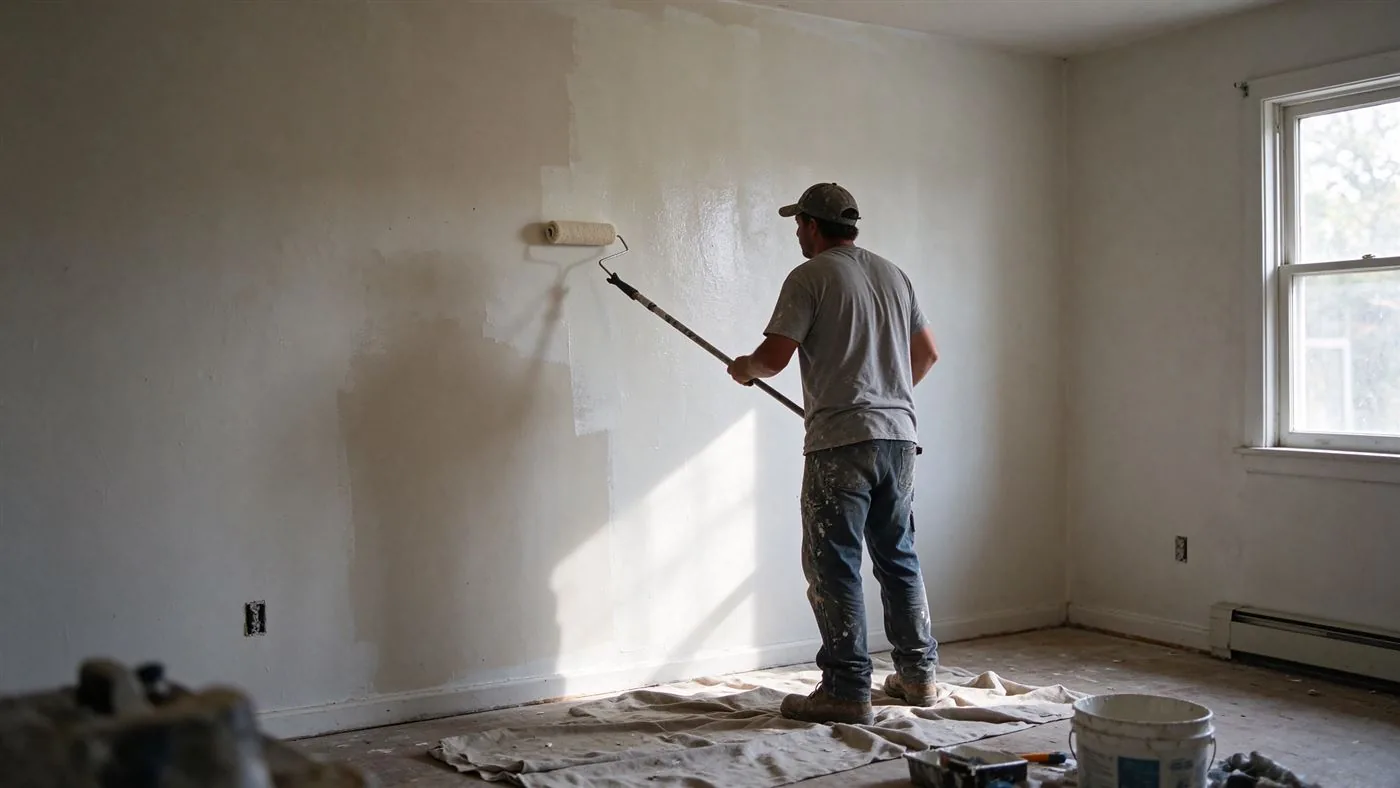
1. Start with net wall area, not gross
A 12 by 10 foot bedroom with 8 foot ceilings has a perimeter of 44 feet. Multiply by the ceiling height and you get 352 square feet of wall. That is the number nearly every online calculator stops at, and it is roughly a quarter too high.
The reason is simple: you do not paint the openings. A bedroom with one door, two windows and a closet loses more surface than most people guess, and the loss compounds with the second coat.
| Opening | Typical size | Area to subtract |
|---|---|---|
| Interior door | 3 ft × 6 ft 8 in | 20 sq ft |
| Exterior door | 3 ft × 7 ft | 21 sq ft |
| Small window | 2 ft × 4 ft | 8 sq ft |
| Double window | 6 ft × 5 ft | 30 sq ft |
| Sliding closet door | 6 ft × 6 ft | 36 sq ft |
Run the bedroom: one interior door at 20, two small windows at 8 each, one sliding closet at 36. That is 72 square feet of opening. Net wall area is 352 − 72 = 280 square feet.
If your estimate was built on 352, you were about 26 percent high on this room. On a bigger room with more glass, the gap widens.
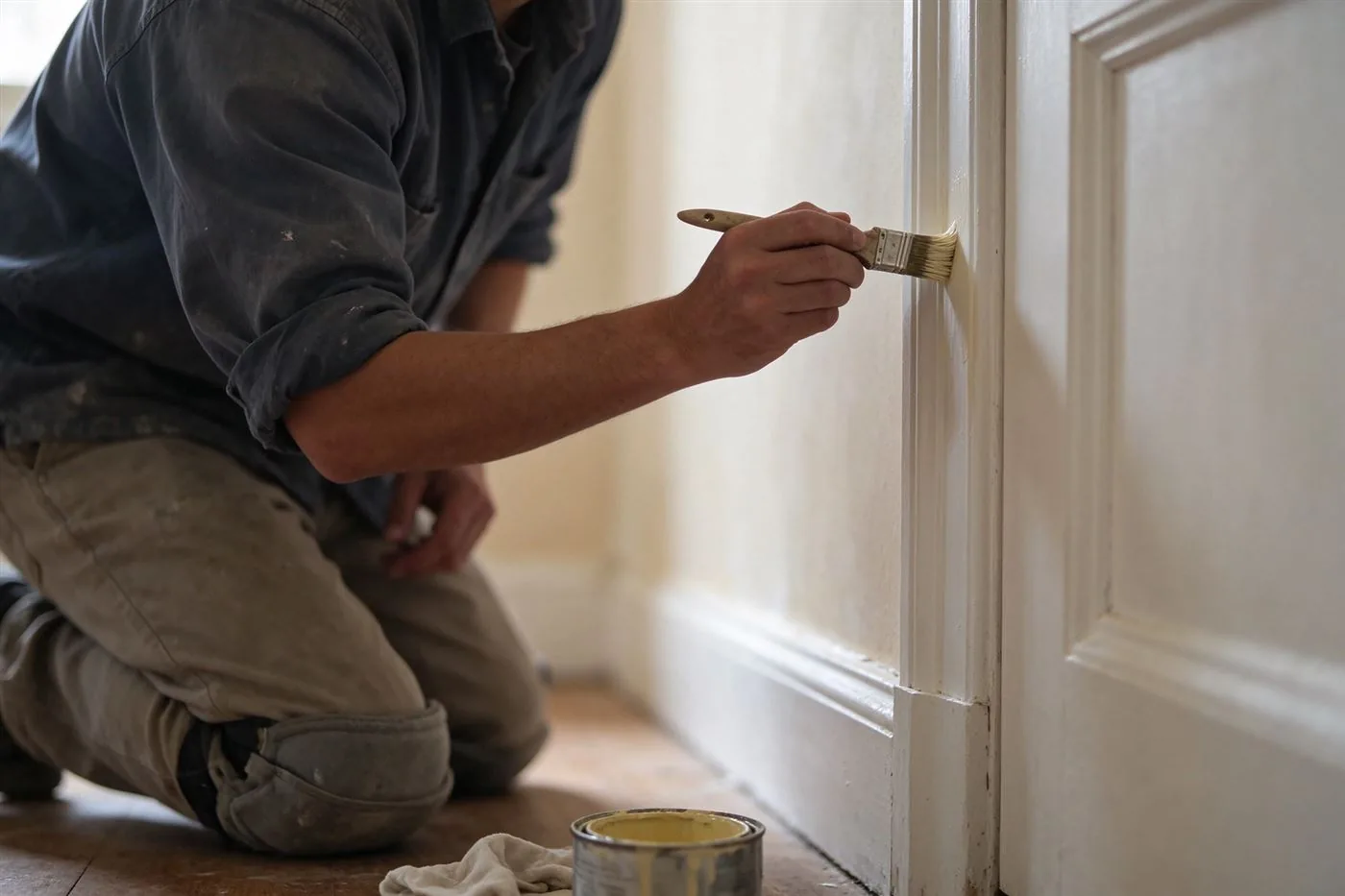
2. Coverage is a range, not a fact
Paint cans state a coverage figure between 350 and 400 square feet per gallon. The label is not being vague to protect itself; the number genuinely moves with the surface.
- 400 sq ft/gal — new, smooth, primed drywall, rolled with a quality 3/8 inch nap cover.
- 350 sq ft/gal — repaint over an existing finish, light colour, standard roller.
- 300 sq ft/gal or less — rough plaster, heavy texture, deep base colour going lighter, or sprayed with a lot of overspray.
Use 350 for anything that is not brand-new drywall. It costs you half a gallon on paper and saves you a second trip to the store, which is the trade almost everyone would take.
3. Two coats is the default, one coat is the exception
One coat only works when you are refreshing the same colour on a wall that is already painted. Change the colour at all and the arithmetic doubles — not because the second coat is vanity, but because a single coat over a different colour shows lap marks and thin spots under any raking light.
So the number you divide by 350 is not the wall area. It is the wall area multiplied by the number of coats:
Gross wall: (12 + 10) × 2 × 8 = 352 sq ft
Minus openings: 352 − 72 = 280 sq ft net
Two coats: 280 × 2 = 560 sq ft of coverage needed
Plus 10% for touch-ups: 616 sq ft
616 ÷ 350 = 1.76 → buy 2 gallons
Note what happened there. The gross-area method gives 352 ÷ 350 = 1.01 gallons, which rounds to a single gallon — and one gallon cannot put two coats on that room. The estimate was not off by a rounding error; it was off by half the job.
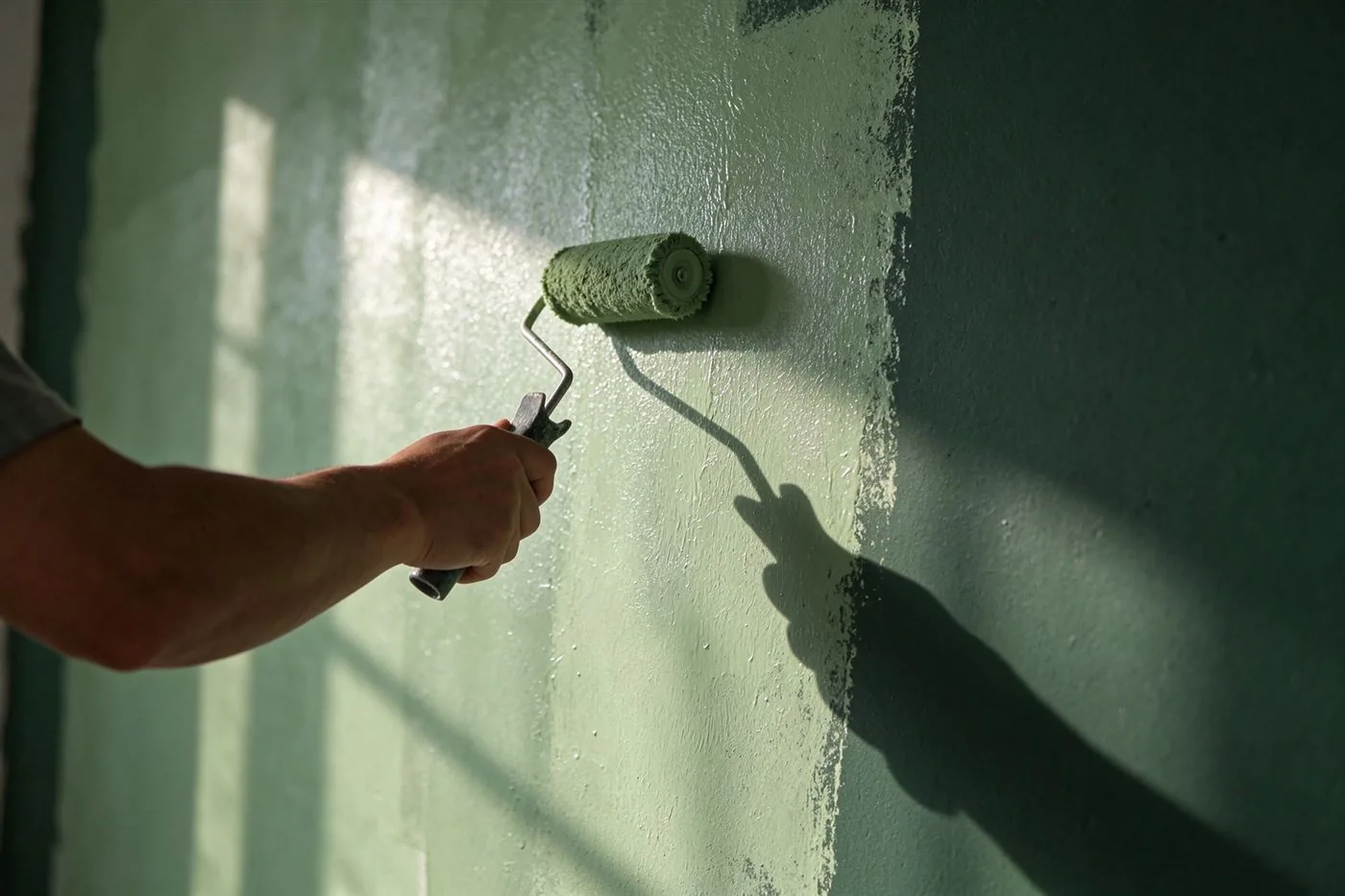
4. Primer is a separate purchase, and it is not optional on new work
Primer is a different product with a different job: it seals the surface so the finish coat does not soak in unevenly. You need it in four situations.
- New drywall — the paper face absorbs paint at a wildly uneven rate without a primer coat.
- Bare wood or patched areas — the patch will read as a different sheen forever if you skip it.
- Going from dark to light — two coats of finish over a deep colour will still ghost without a primer barrier.
- Stains or water marks — a stain-blocking primer is the only thing that keeps them from bleeding back through.
Primer covers about the same area as paint per gallon, so the 280 square foot bedroom needs one gallon of primer for one coat. Budget it at roughly 60 to 70 percent of the finish paint price.
If you are repainting the same colour on a sound, previously painted wall, you can skip the primer entirely. That is the one case where the paint count is also the whole bill.
5. One gallon or five: the size that actually saves money
Paint gets cheaper per gallon as the container grows, and this is where people waste the most money on a single-room job.
| Container | Typical price | Per gallon | Coverage at 350 sq ft/gal |
|---|---|---|---|
| 1 gallon | $38 | $38.00 | 350 sq ft |
| 5 gallons | $165 | $33.00 | 1,750 sq ft |
Five dollars a gallon is real money on a whole-house repaint — about 13 percent. But it only pays if you can use the volume. On the 280 square foot bedroom you need 2 gallons, so a 5-gallon pail means $89 of paint sitting in a can that will skim over before you find another use for it.
The crossover
Buy the 5-gallon pail when the job needs 4 gallons or more — roughly 1,200 square feet of net wall at two coats. Below that, two or three singles are cheaper in total, even at the higher unit price.
One more wrinkle: paint tinted at the counter cannot be returned in most states once it is mixed. Buying a pail you do not finish is not a rounding error, it is a sunk cost.
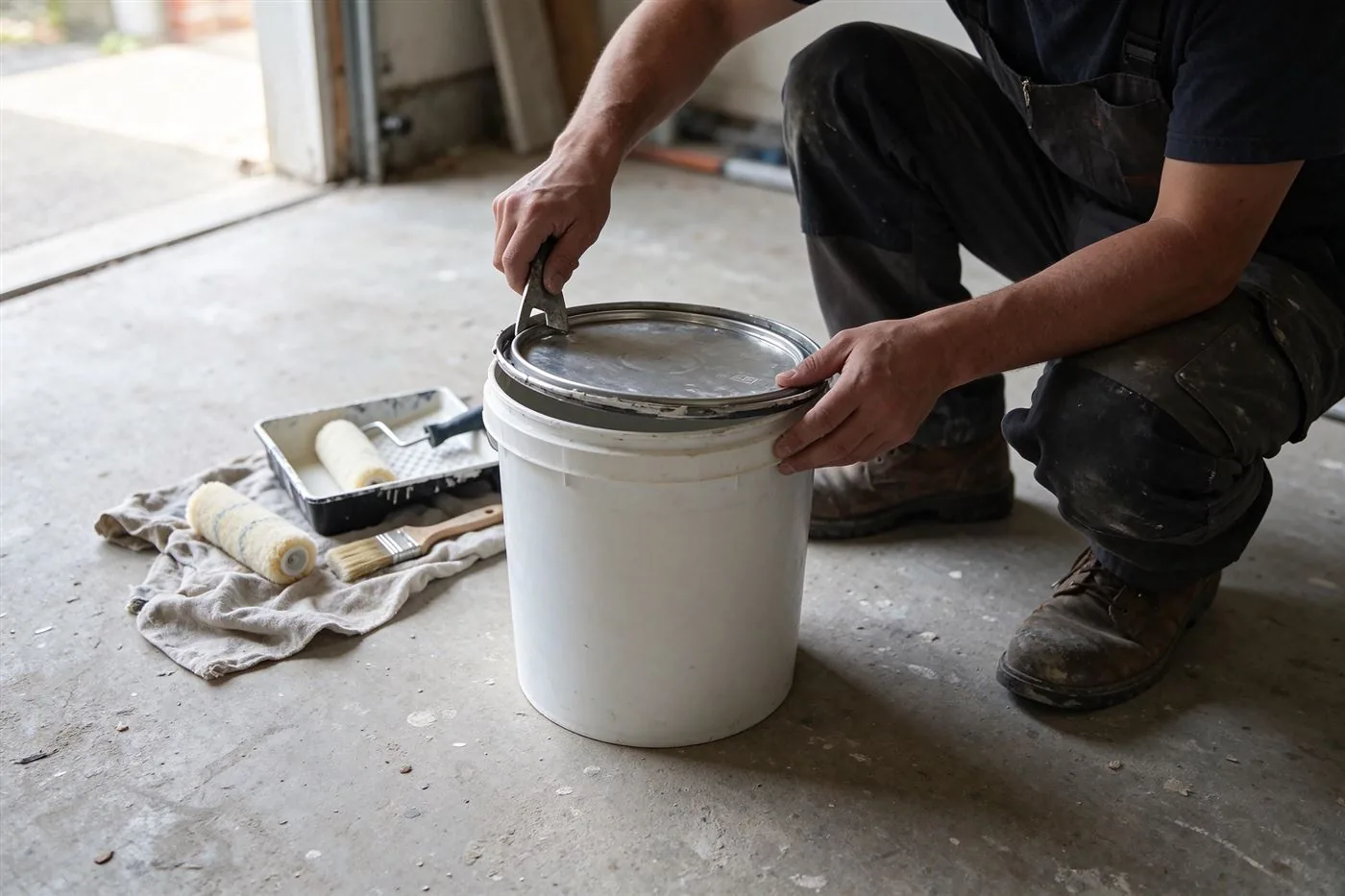
6. What a room actually costs, and where the money goes
Paint is the cheapest part of a repaint. On a typical single-room job, the split runs roughly like this:
| Line | Share of the bill | What is in it |
|---|---|---|
| Paint and primer | 17% | Finish coats, primer, tinting |
| Supplies | 5% | Roller covers, tray, brushes, tape, drop cloths, sanding |
| Labour | 78% | Prep, masking, cutting in, two coats, cleanup |
That 78 percent is the number worth internalising. It explains two things people find counter-intuitive: why a "cheap" paint that needs three coats costs more than a good one that needs two, and why adding a second room to the same visit is so much cheaper than booking a second appointment.
For the 12 by 10 bedroom above, a full professional repaint lands around $930: about $158 of paint and primer, $47 of supplies, and $725 of labour. Doing it yourself moves the $725 into your own weekend and leaves roughly $205 of material.
7. Four places the count still runs short
The ceiling
A 12 by 10 ceiling is another 120 square feet, and ceilings almost always need two coats because ceiling white is unforgiving about streaks. That is 240 square feet of coverage — call it one more gallon. Ceilings also take a different finish (flat, not eggshell) so it is a separate purchase anyway.
Trim, doors and baseboard
Trim is measured in linear feet, painted in semi-gloss, and bought in quarts. A bedroom with 44 feet of baseboard, two doors and one window has roughly 90 linear feet of trim, which is about 1 quart. Do not try to stretch wall paint onto trim; the sheen is wrong and it will not hold up to cleaning.
Deep colour going lighter
Red, navy and charcoal to off-white is the classic three-coat job. Add a tinted primer and you are at 3 gallons for a room that the formula said needed 2.
Spraying instead of rolling
Airless sprayers are fast but wasteful: expect 15 to 20 percent more paint than the roller estimate for the same wall, before you count the masking film and the time spent protecting everything you do not want coated.
8. The short version
Perimeter times height gives gross wall area. Subtract every opening, using real sizes rather than a guess. Multiply by the number of coats. Add 10 percent. Divide by 350. Round up to the container size you can actually finish.
That is five steps, and four of them are the steps most calculators leave out.